
Sliding Glass Door Adjustment & Alignment in Orlando, FL
Fast, honest sliding glass door adjustment for homes and businesses in Orlando. 5.0-star rated on Google.
Sliding Glass Door Adjustment in Orlando
Sliding glass door adjustment is the fix for a patio door that takes two hands, drags on one corner, or leaves a wedge of daylight at the top when it is closed.
Most sliding doors have adjustment screws behind the bottom edge of the panel that raise and lower each roller, and getting them set correctly is the difference between a door you shove and a door you push with one finger.
From College Park bungalows to new builds near Lake Nona and the tourist corridor, Orlando homes lean hard on their patio doors year-round. Heat, humidity and daily use wear out rollers and tracks faster here than almost anywhere.
Adjustment is the first thing we check on any sliding door call, because a door that is merely out of square does not need new parts. We set the roller height, square the panel to the jamb, and confirm the lock lines up with its keeper.
If the rollers turn out to be worn flat rather than just low, we will tell you that on the spot instead of adjusting a part that is already finished. We’re based right here in Orlando — no trip fees from out of town, no guessing about local door types.
Get a Free Quote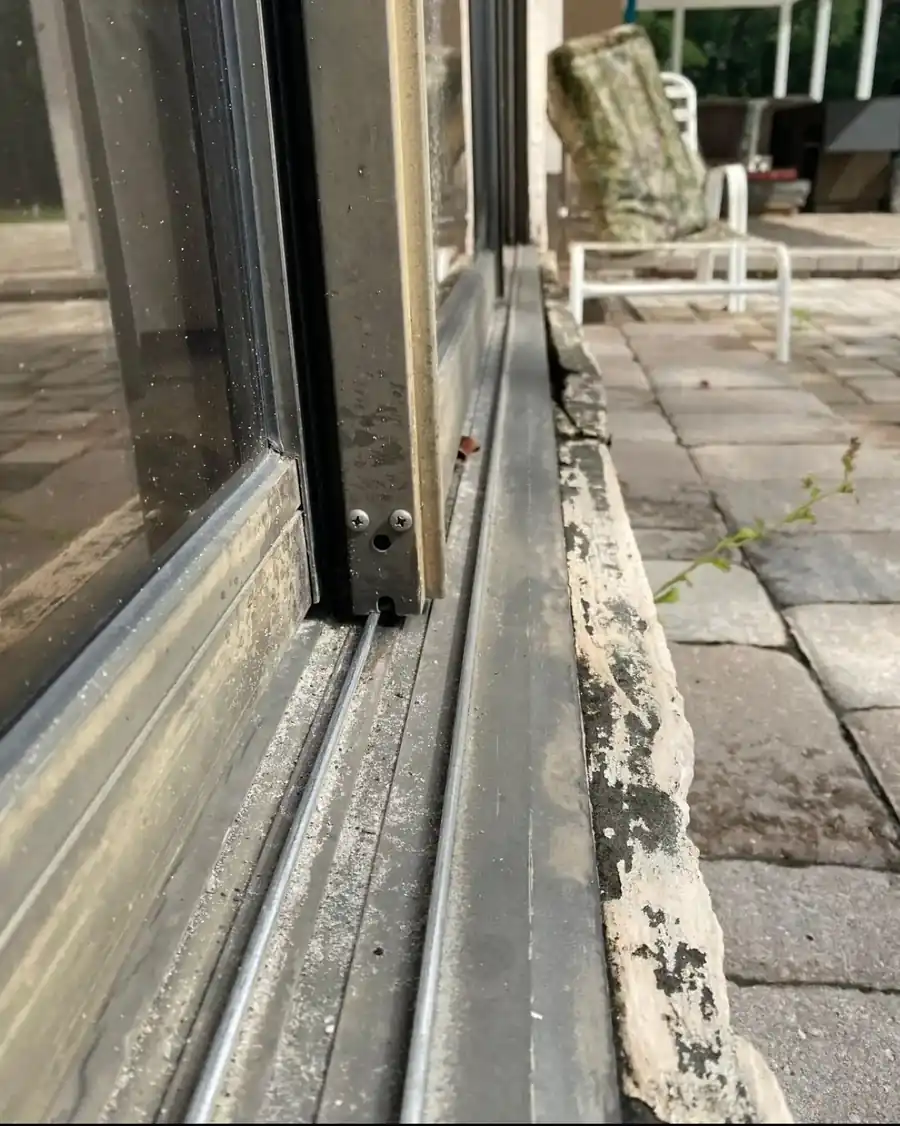
Signs you need sliding door repair in Orlando
These are the six problems behind almost every sliding door repair call we get in Orlando — and every one of them is fixable without replacing the door.
Sliding Glass Door Adjustment services
Roller height set correctly
Both adjustment screws dialled in so the panel rides level and clears the track.
Panel squared to the frame
The closed edge brought parallel to the jamb so the gap is even top to bottom.
Lock and keeper realigned
The latch meets its keeper cleanly so the door locks without lifting or shoving.
Track cleaned and checked
Grit and debris cleared, and the track inspected for the gouges adjustment cannot fix.
Honest call on worn rollers
If the rollers are flat-spotted, adjusting them is a temporary fix and we will say so.
Every part carries a 2-year warranty
If adjustment turns into a roller or track repair, the parts we fit are covered.
What customers say
Sliding Glass Door Adjustment FAQs
Where are the adjustment screws on a sliding glass door?
On almost every residential sliding door they are at the bottom of the moving panel, near each end of the closed edge and the leading edge. Some are open holes; many are hidden behind a small plastic cap or plug you pop out with a flat screwdriver.
Turning the screw raises or lowers that roller, which is how you level the panel.
Can I adjust my sliding glass door myself?
Often yes, and it is one of the few sliding door jobs that is genuinely DIY-friendly. Work in small increments — a quarter turn at a time, alternating ends — and check the gap along the closed edge as you go.
Two things trip people up: turning one screw a long way instead of balancing both, and adjusting a door whose rollers are already worn out, which never holds.
Why does my sliding door go out of adjustment again after I fix it?
Because adjustment was not the underlying problem. If the roller wheels are flat-spotted, seized or missing bearings, raising them buys you a few weeks and then the panel settles again. The same goes for a bottom track that has been gouged. Adjustment holds when the hardware underneath it is still sound.
How much does sliding glass door adjustment cost in Orlando?
It depends on what we find once the panel is level — a straight adjustment is a different job from an adjustment that uncovers worn rollers or a damaged track.
Describe how the door is behaving over the phone and we will give you a free ballpark before we come out, then confirm the exact price on-site in writing before any work starts.
Will adjusting the door fix a lock that will not catch?
Frequently, yes. A latch that misses its keeper is usually a symptom of a panel that has dropped, not a broken lock, and bringing the roller height back up puts the latch where it belongs.
If the keeper itself is bent or the lock mechanism has failed, that is a separate repair and we will show you which one you are looking at.
Do you adjust all sliding door brands?
We work on the systems common across Central Florida — PGT, MI, Andersen, Milgard, CGI and the unbranded builder doors in most subdivisions. Adjustment-screw location and roller design vary by brand, which is mainly a matter of knowing where to look rather than a reason to turn a job down.
Why Orlando patio doors drift out of adjustment
A sliding glass door is a heavy panel balanced on two small wheels. Everything about how it feels — whether it glides with a fingertip or needs a shoulder — comes down to where those wheels are set and whether the panel is square in its opening. Doors do not go out of adjustment at random.
In Orange County there are four causes behind almost every call, and knowing which one you have tells you whether an adjustment will actually hold.
The house settles, the opening does not stay square
Central Florida builds on sand and fill, and slabs move. A patio opening that was square at handover can be a few millimetres out of true a decade later.
The panel is still the same size, so the gap that used to be even now tapers — tight at the top on one side, wide at the bottom on the other. The door binds where the gap closes up. Adjustment compensates for this, and on a settled opening it is often the entire fix.
Grit works into the track and lifts the panel
Pool deck sand, lawn clippings and storm debris all end up in the bottom track. As it packs down, the rollers ride up over it rather than through it, which changes the effective height of the panel and throws the alignment off even though nothing has worn out.
You feel this as a door that slides fine for most of its travel and then binds at one particular spot. Clearing the track first and adjusting second is the right order — adjusting to compensate for debris just moves the problem.
Someone already turned the screws
This is more common than you would think, and it is not a criticism — adjustment is one of the few sliding door jobs that genuinely invites a DIY attempt. The usual pattern is one screw turned a long way to lift a dragging corner, which levels that end and tips the other.
The door improves for a week and then feels worse than before. Bringing both ends back to a known baseline and working in small alternating increments is how it gets sorted.
The rollers are worn, and adjustment is only borrowing time
This is the important one. If a roller wheel has flat-spotted, seized, or lost its bearing, raising it with the adjustment screw lifts the panel back to where it should sit — briefly. The wheel is still not rolling properly, so it settles again, usually within a few weeks.
Any technician can turn a screw and hand you a door that feels better on the day. We would rather tell you on the spot that what you actually have is a roller problem, because you will find out anyway and it is cheaper to do it once.
What a sliding door adjustment actually involves
There is no mystery to it, and we are happy for you to watch. The sequence matters more than the tools.
1. Read the gap before touching anything
With the door closed, we look along the closed edge from inside. An even gap top to bottom means the panel is square; a tapering wedge tells us which end is low and by roughly how much. This is the measurement the whole job works from, and skipping it is why blind adjustment so often makes things worse.
2. Clear the track
The panel comes to one side and the bottom track gets vacuumed and wiped down to the bare channel. Adjusting a door over packed grit sets the rollers to the wrong reference height, and as soon as the debris compacts or washes out the setting is wrong again.
3. Inspect the rollers before adjusting them
We check whether the wheels actually turn freely and whether they have flat spots. On many doors this is visible by tilting the panel; on others we pull the roller assembly. This is the go or no-go point: sound rollers get adjusted, worn rollers get quoted for replacement and we tell you the difference in price before we proceed.
4. Set both ends in small increments
The adjustment screws sit behind the bottom edge of the panel, usually under a plastic cap. We work a quarter turn at a time, alternating ends, checking the gap and sliding the door between passes. Getting there in six small moves takes less time than getting there in two big ones and undoing them.
5. Confirm the lock and the seals
A properly adjusted panel should latch without lifting or leaning on it, and the weatherstrip should touch evenly along its length. If the latch still misses the keeper after the panel is level, the keeper or the lock is the problem rather than the height, and that is a separate repair we will show you.
We adjust and align sliding glass doors across Orlando and Central Florida — Dr. Phillips, Windermere, Winter Park, Baldwin Park, College Park, MetroWest, Lake Nona, Hunter’s Creek, Conway, Avalon Park and Waterford Lakes among them.
If the panel has dropped because the wheels are finished, see sliding glass door roller replacement; if the running surface itself is gouged, adjustment will not hold and track repair is the fix.
For a latch that will not catch on a level door, see lock repair, and for the full picture start at sliding glass door repair. We are a licensed and insured, family-owned Orlando company rated 5.0 stars across 200+ Google reviews, and every part we install carries a 2-year warranty.
Need your door fixed in Orlando?
Call now for a free ballpark estimate over the phone.
Call (407) 900-9412