
The right sliding glass door lubricant can turn a stiff, squeaky slider into one that glides with one finger. The wrong one can leave your track gummed up with sand within a week.
Here in Central Florida, humidity, salt air, pool-deck sand and pollen make that choice matter even more. This guide covers which lubricant to use, what to keep away from your door, how to apply it step by step, and how to tell when no spray will fix the problem.
What is the best sliding glass door lubricant?
For most sliding doors, the best choice is a silicone-based spray. A dry PTFE spray (the slippery coating often sold as “dry lube”) works well too.
Both go on wet, then leave a thin, slick film that does not stay oily. That is the key. A sliding door sits right at floor level, where sand, dust and pet hair collect. Anything that stays wet will grab that grit and grind it into the rollers.
When you shop, look for these on the label:
- Silicone-based or dry PTFE formula.
- Safe on plastic and rubber, since many rollers and seals are plastic or rubber.
- A straw or narrow nozzle, so you can aim at the rail instead of the glass.
- Labeled for doors, windows or tracks, if you can find it.
You do not need anything fancy. A basic can of silicone lubricant for sliding glass doors from the hardware store will last a long time, because you only need a light mist.
What not to use on your sliding glass door
This is where most homeowners go wrong. The products below feel slick for a day, then make things worse:
- Oil-based sprays and household oils. They leave a wet film that traps sand and dirt in the track.
- Grease and petroleum jelly. Thick and sticky. They turn into a dark paste once grit gets in.
- Cooking oil. It gets gummy and can go rancid in the Florida heat.
- Powdered graphite in the track. It is messy, gets tracked onto floors and can stain flooring and carpet.
Also, never spray the glass or the frame finish. And keep oil-based products away from the rubber weatherstripping, since some of them can break rubber down over time.
Why silicone lubricant for sliding glass doors works well in Florida
Florida is tough on sliding doors. Our humidity keeps tracks damp, salt air speeds up corrosion on aluminum near the coast, and every trip to the pool brings sand back to the door.
A dry silicone film handles that well. It does not wash off in the first summer storm, it does not hold onto grit the way oil does, and it is generally safe around the plastic parts on many doors.
Many Orlando homes also came with builder-grade plastic rollers. Those wear faster than better-quality steel or ball-bearing rollers. A light silicone coat on the rail can reduce friction and help them along, but it will not bring a worn roller back to life.
How to lubricate a sliding glass door in 6 steps
This takes about 15 minutes. Lubricating a dirty track just turns dirt into sludge, so cleaning comes first.
- Open the door all the way. This exposes the full length of the bottom track.
- Vacuum the track. Use a crevice tool to pull out sand, leaves and pet hair. Our guide on how to clean sliding glass door tracks covers stubborn buildup.
- Wipe the raised rail. Use a damp cloth with a little dish soap, then dry it completely. The rail is the thin ridge the rollers ride on.
- Spray a light mist on the rail. Aim the straw at the rail along its full length. A light coat is enough. If it pools or drips, you used too much.
- Slide the door 10 to 15 times. Open and close it fully so the rollers spread the lubricant evenly.
- Wipe off any extra. Run a dry cloth along the rail and the track floor. Leftover lubricant is what attracts new dirt.
Other spots that may need a touch
If the door still feels stiff or noisy, a little lubricant can also go on these parts:
- The top track. Wipe it clean and spray a light mist if the panel rubs at the top.
- The latch and lock hook. A small spray on the moving latch parts can help a lock that is hard to turn. Wipe off the extra so it does not run down the frame.
- The roller openings. On some doors you can see the roller housing at the bottom of the panel. A short spray toward the wheel can help, but do not soak it.
Squeaky sliding glass door? Lubricant may stop the noise
A squeaky sliding glass door is one of the most common reasons people go looking for a lubricant. Often the squeak comes from a dry rail, a dry roller or weatherstripping rubbing the frame.
Clean the track and apply lubricant as described above. If the squeak stops and stays gone for weeks, you are done.
Pay attention to the type of noise, though:
- A light squeak is often fixed with cleaning and lubricant.
- Grinding or scraping usually means a roller is cracked, flat-spotted or not turning at all.
- A thump or bump as the door moves often points to a damaged roller wheel or a dent in the rail.
If you hear grinding, lubricant is a band-aid. Our post on the signs your sliding glass door rollers are worn out will help you check.
How often should you use sliding door lubricant?
For most Central Florida homes, lubricating every few months is plenty. Do it right after you clean the track, not instead of cleaning it.
A few situations call for more frequent care:
- Doors that open to a pool deck or a sandy yard.
- Homes near the coast, where salt air is in play.
- Spring pollen season, when everything gets a yellow coat.
- Before hurricane season, when you want the door and weep holes working well.
Here is the honest test: if you need to spray every week to keep the door moving, the lubricant is hiding a bigger problem.
When no sliding glass door lubricant will fix it
Lubricant helps a healthy door move more easily. It cannot fix broken parts. Call for help if you notice any of these:
- The door still drags or grinds after a full clean and lube.
- The panel sits low or rubs the bottom of the frame.
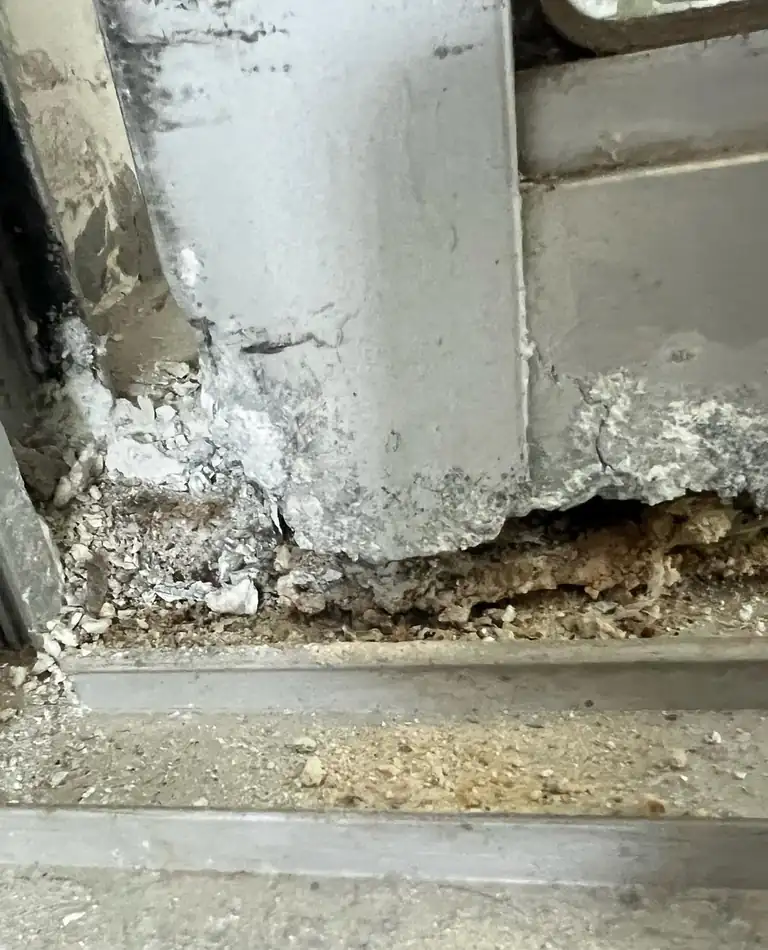
- The raised rail is bent, chipped or corroded.
- You can see crumbling corrosion at the bottom of the panel, like in the photo above.
- The door jumps off the track or the lock no longer lines up.
Sometimes a door that sits too low just needs the rollers raised. Our guide on how to adjust sliding glass door rollers walks through it. If the rollers are worn out, adjusting will not last.
DIY vs. calling a pro
Cleaning and lubricating a sliding glass door is a great DIY job. It is cheap, safe and takes less time than a load of laundry.
Replacing rollers is a different story. The panel has to come out of the frame, and a glass panel can be very heavy. Dropping one can mean broken glass and an injury. Rollers also come in many shapes, and the wrong one can leave the door sitting crooked.
If lubricant did not solve it, that is usually the point to bring in a pro. Our sliding glass door repair service handles rollers, tracks, locks and alignment.
What a repair costs if lubricant is not enough
Worn rollers are the most common fix when a slider still drags after lubrication. Roller replacement typically runs $275 for a standard door and $395 for oversized or high-end doors like Andersen and PGT.
Every part we install comes with a 2-year parts warranty. For a full breakdown, see our roller replacement cost guide, or read about roller replacement in Orlando.
Sliding glass door lubricant FAQ
What is the best lubricant for sliding glass doors?
A silicone-based spray or a dry PTFE spray is the best choice for most sliding glass doors. Both leave a thin, slick film that does not stay wet and sticky, so it does not grab sand and dirt. Check the label says it is safe on plastic and rubber before you use it near rollers or seals.
Can I use WD-40 on a sliding glass door?
We do not recommend oil-based sprays for the track. They feel slick at first, but the oily film collects sand and dirt and can leave the door stickier than before. If the door needs lubrication after cleaning, a light mist of silicone spray on the raised rail is the better choice.
How often should I lubricate a sliding glass door?
For most Central Florida homes, every few months is plenty, right after you clean the track. Doors that open to a pool, beach or sandy yard may need it more often. If you find yourself spraying every week, the lubricant is covering a bigger problem, usually worn rollers.
Why is my sliding glass door still squeaking after I lubricated it?
A squeak that comes back right away usually means a worn roller, a cracked roller wheel or a part rubbing that lubricant cannot reach. Grinding or scraping is a stronger sign the rollers are done. New rollers typically cost $275 for a standard door and $395 for oversized or high-end doors like Andersen and PGT.
Should I put lubricant on the rubber seals?
Only if the product label says it is made for rubber or weatherstripping. Most of the time, the seals just need a wipe with a damp cloth. Oil-based products can break down some rubber over time, so keep them away from your seals.
Is a silicone based lubricant the best patio door lubricant?
For most sliding patio doors, yes. A silicone based lubricant dries to a thin, slick film that does not stay wet, so it does not pick up the sand and grit that blow onto Florida patios and pool decks.
When you shop for the best silicone lubricant for sliding doors, check that the label says it is safe on plastic and rubber, then mist it lightly on the raised rail after the track is clean. Skip greases and oil-based sprays; they collect dirt and can make the door drag more over time.
Still sticking after you lubricate it?
If your slider still drags, grinds or squeaks after a good clean and the right lubricant, it likely needs a repair. Stuck Door is a family-owned Orlando company, licensed and insured, with a 5.0-star rating across 200+ Google reviews.
Most repairs are done in a single visit. If your door needs a special-order part, we will tell you upfront.
Call (407) 900-9412 for a free phone ballpark, or use the chat assistant on our site for an instant quote. You can also send us a message. Our office is open until 6 PM.
3 Responses