
If you want to know how to insulate sliding glass doors, you are probably standing next to one right now, feeling the heat pour through it. A patio slider is the biggest sheet of glass in most Florida homes, and often the leakiest spot in the wall.
The good news: most of the fixes are simple, and several cost nothing. This guide walks through eight ways to insulate a sliding glass door, in the order we would try them, plus when the real problem is a worn part that needs repair.
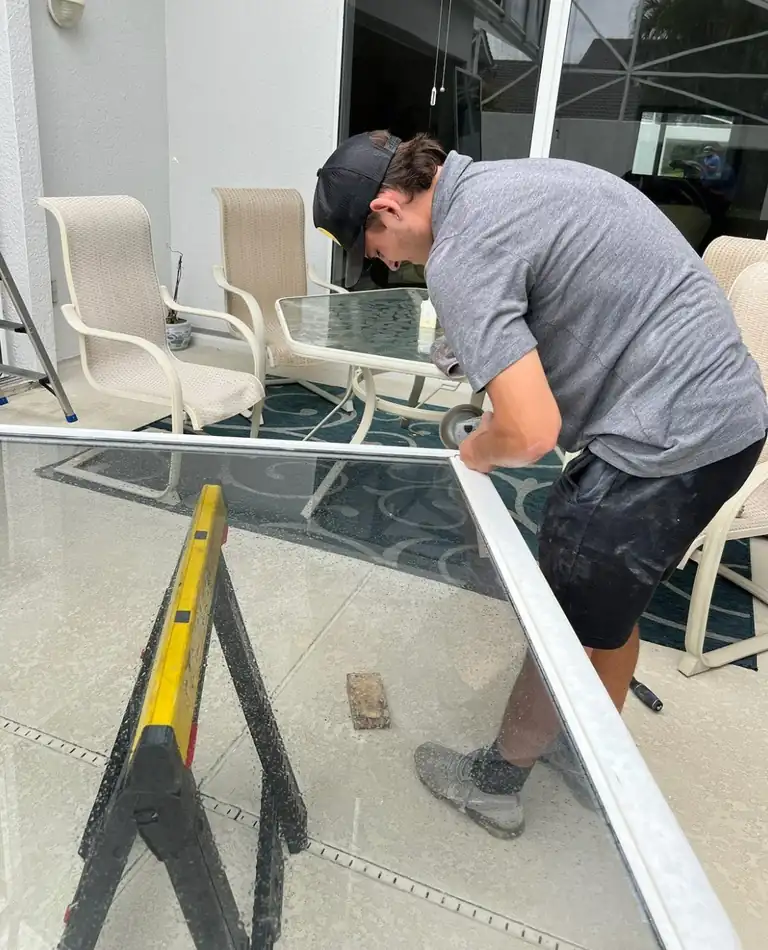
Why sliding glass doors lose so much energy
A sliding glass door loses energy in two ways. Knowing which one you have tells you which fix to use.
- Air leaks. Outside air sneaks in around the edges of the panel, through worn seals, gaps and a door that does not close square.
- Heat through the glass. Sun and outdoor heat pass straight through the glass itself, even when the door is sealed tight.
Up north, people insulate sliding doors to keep the cold out. In Central Florida, the job is mostly the opposite. You are keeping heat and humidity out and the air conditioning in, for most of the year.
Florida is also hard on the parts that do the sealing. Humidity, salt air and strong sun wear down weatherstripping, and builder-grade rollers wear out and let the door sag. A sagging door leaves gaps.
First, find where your door is leaking
Before you buy anything, spend five minutes finding the problem. These quick checks tell you a lot.
- Look for daylight. Close the door and look along every edge from inside. If you can see light, air is getting through.
- Feel for air. On a windy day, run the back of your hand slowly around the frame and where the two panels overlap.
- Try the paper test. Close the door on a strip of paper. If it slides out with no drag, the seal there is not doing its job.
- Check the lock. Lock the door and push on the panel. If it still rattles, the latch is not pulling it tight.
- Look between the panes. Fog, haze or water drops inside the glass mean the glass unit’s seal has failed.
How to insulate sliding glass doors: 8 ways that work
Here is how to insulate sliding glass doors without wasting money. The first few steps are free or cheap. The later ones are repairs.
1. Clean the track so the door closes all the way
Sand, pet hair and grit in the track can stop the door a hair short of closed. That tiny gap leaks air all day. Vacuum the track, wipe it out, and make sure the door slides fully into the jamb.
2. Replace worn weatherstripping
Weatherstripping is the fuzzy or rubbery seal around the panel. When it is flat, torn, brittle or missing, air walks right in. This is the most common cause of a drafty slider, and replacing it is the fix that pays off most often.
The trick is matching the right size and type. A seal that is too thin does nothing, and one that is too thick makes the door hard to slide. Our guide to signs your weather stripping has failed shows what to look for.
3. Seal the spot where the two panels meet
The vertical line where the sliding panel overlaps the fixed panel is called the interlock. It has its own seal, and it takes a beating. If you feel air there, that seal needs attention even if the rest look fine.
4. Fix the alignment and the rollers
A door that sits low on one side leaves a wedge-shaped gap at the top or along the jamb. No amount of new seal fixes that. The door has to sit square first.
Sometimes a simple roller adjustment brings it back. If the rollers are worn out, they need replacing. Roller replacement typically runs $295 for a standard door and $395 for oversized or high-end doors like Andersen and PGT. Our roller replacement cost guide explains what goes into that.
5. Make sure the lock pulls the door tight
The lock does more than keep people out. It pulls the panel snug against the seals. If the latch barely catches, or the keeper has shifted, the door closes but never really seals. Adjusting or replacing the lock closes that gap.
6. Caulk the outside of the frame
Check the line where the door frame meets the wall on the outside. Old caulk cracks and pulls away in the Florida sun. Fresh exterior-grade sealant there stops air and water from getting in around the frame.
One warning: never caulk over the small weep holes at the bottom of the track. They let rainwater drain out. Block them and the track fills with water in the next storm.
7. Cut the heat coming through the glass
Once the air leaks are handled, deal with the glass. You have a few options, from cheapest to most involved.
- Curtains, shades or blinds. Lined thermal curtains or cellular shades slow the heat, especially on west-facing doors. Close them in the afternoon.
- Window film. Heat-control film reflects part of the sun’s heat. Check with your door’s manufacturer first, because some films can affect the glass warranty on insulated units.
- Outside shade. A covered lanai, awning or shade screen stops the sun before it ever reaches the glass.
We do not sell or install curtains or film. We mention them because they work, and because they are worth doing before you spend money on new glass.
8. Replace failed or single-pane glass
Most modern sliders use an insulated glass unit, which is two panes sealed together with a gap between them. When that seal fails, the glass fogs up and stops insulating well.
In many cases, just the glass unit can be swapped while the frame stays. That is far less work than a new door. See our fogged or broken glass replacement service for how that works.
If you are weighing new glass anyway, ask about low-E glass, which has a coating that reflects heat. Impact glass is another option in Florida. Our post on hurricane impact sliding glass doors covers it.
Insulating sliding glass doors for winter in Florida
People searching for how to insulate sliding glass doors for winter usually live where it snows. Our winters are short, but a few cold snaps roll through Central Florida every year, and a leaky slider makes the heater work hard.
The steps are the same. Seal the air leaks first, then close heavy curtains at night to hold the warmth in. Everything you fix for winter keeps paying you back the rest of the year, when the air conditioning is running.
DIY or call a pro?
Most of what goes into how to insulate sliding glass doors is DIY-friendly, but not all of it. Here is our honest take.
- Good DIY jobs: cleaning the track, hanging curtains or shades, re-caulking the outside of the frame, and simple stick-on seals.
- Maybe DIY: replacing weatherstripping, if you can match the exact size and the panel does not need to come out.
- Best left to a pro: rollers, alignment, lock replacement and glass. These mean lifting the panel out or handling the glass unit.
Sliding door panels are heavy. Taking one out is a two-person job, and a dropped panel can shatter or hurt someone. If the fix means removing the door, that is the point to call.
A pro can also tell you quickly whether the door is worth insulating or whether the frame is too far gone. If it is, we handle sliding glass door installation too.
What does it cost to insulate a sliding glass door?
It depends on which problem you have. Cleaning the track and closing the curtains cost nothing. Caulk and basic seals are a small hardware store purchase.
Repairs cost more, and every door is different, so we would rather give you a real number than a guess. For rollers, the typical price is $295 for a standard door and $395 for oversized or high-end doors. For anything else, call us for a free phone ballpark.
Every part we install comes with a 2-year parts warranty. Most repairs are done in a single visit. If your door needs a special-order part, such as a custom glass unit, we tell you upfront.
Sliding glass door insulation FAQ
What is the cheapest way to insulate a sliding glass door?
Start with the free steps. Clean the track so the door closes fully, make sure the lock pulls the panel tight, and close blinds or curtains during the hottest part of the day. After that, replacing worn weatherstripping is usually the lowest-cost fix that makes a real difference.
How do I stop a draft from my sliding glass door?
Find where the air is getting in first. Most drafts come from flattened weatherstripping where the two panels meet, a door that sits crooked on worn rollers, or a lock that no longer pulls the panel snug. Fix that cause and the draft usually stops.
Do thermal curtains really help insulate sliding glass doors?
Yes, they help. Heavy, lined curtains or cellular shades slow the heat coming through the glass, especially on doors that face the afternoon sun. They do not fix air leaks, so pair them with good seals for the best result.
Is it better to insulate or replace an old sliding glass door?
If the frame is solid, insulating and repairing is usually the better value. New weatherstripping, new rollers and a new insulated glass unit can make an older door seal well again. Replacement makes more sense when the frame is corroded, bent or damaged.
Does a foggy sliding glass door mean it has lost its insulation?
Usually, yes. Fog or moisture between the two panes means the factory seal on the glass unit has failed, so it no longer insulates the way it did. The glass unit can often be replaced without replacing the whole door.
Get your sliding door sealing like it should
Now you know how to insulate sliding glass doors the right way: stop the air leaks first, then deal with the glass. If your door needs new seals, rollers, a lock adjustment or new glass, we can help.
Stuck Door is a family-owned Orlando company, licensed and insured, with a 5.0-star rating across 200+ Google reviews. We offer sliding glass door weatherstripping in Orlando and full sliding glass door repair across Central Florida.
Call (407) 900-9412 for a free phone ballpark, or use the chat assistant on our site for an instant quote. You can also send us a message. Our office is open until 6 PM.
One Response