
Your patio door is working hard right now. While you’re reading this, it’s blocking Central Florida’s humidity, filtering UV rays, insulating your home, and standing ready to provide instant access to your outdoor space. It opens and closes hundreds of times per year, endures temperature swings, and battles windblown debris.
Yet most homeowners don’t think about patio door maintenance until something goes wrong. That squeaky sound you’ve been ignoring? That tiny gap letting in drafts? That door that’s getting harder to slide? These are early warning signs that your door is asking for help.
The good news: properly maintained patio doors can last approximately 20 years or more. The even better news: the maintenance required to reach that lifespan is surprisingly simple. We’re talking minutes per month, not hours per week.
Let’s make sure your patio door reaches its full potential.
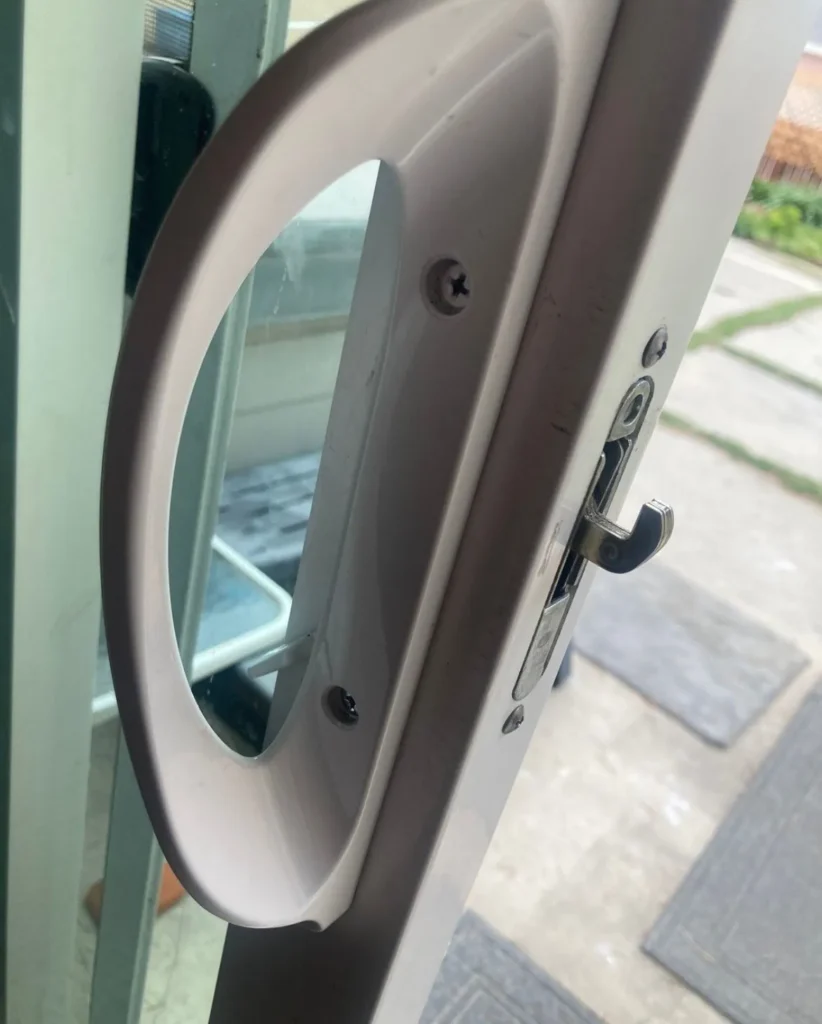
Alt text: “Well-maintained sliding patio door with clean tracks and clear glass showing proper maintenance results”
Why Patio Door Maintenance Actually Matters
Before we get into the “how,” let’s talk about the “why.” Understanding what maintenance prevents makes you more likely to actually do it.
What Happens Without Regular Maintenance
Short-term consequences (1-2 years):
- Door becomes harder to open and close
- Squeaking and grinding noises develop
- Glass gets permanently etched by minerals
- Weatherstripping starts failing
- Energy bills slowly increase
Medium-term consequences (3-5 years):
- Rollers wear out prematurely ($200-$300 to replace)
- Track damage requires professional repair ($300-$500)
- Seals fail completely, allowing water infiltration
- Frame deterioration begins
- Security becomes compromised
Long-term consequences (5-10 years):
- Complete door replacement needed ($2,000-$4,000)
- Water damage to surrounding walls and flooring
- Mold growth from moisture infiltration
- Significantly higher energy costs
The math is simple: 15 minutes of monthly maintenance prevents thousands in repairs. That’s a pretty good return on investment.
What Proper Maintenance Achieves
- Extends lifespan from 10-15 years to 20-25+ years
- Maintains smooth operation – No struggling with stuck doors
- Preserves energy efficiency – Keeps heating and cooling costs down
- Prevents water damage – Saves thousands in potential repairs
- Maintains home value – Well-maintained features = higher resale value
- Ensures safety – Properly functioning locks and glass
[Image suggestion: Timeline infographic showing well-maintained vs neglected patio door lifespan]
Alt text: “Comparison timeline showing lifespan of well-maintained patio door versus neglected door with maintenance impact”
Your Monthly Maintenance Routine (15 Minutes)
This is your foundation. Fifteen minutes once a month keeps your patio door in excellent condition.
Track Cleaning (5 minutes)
Your patio door tracks are exposed to seasonal temperature extremes and blown-in debris, so cleaning them monthly is essential.
What you’ll need:
- Vacuum with hose attachment
- Warm soapy water
- Old toothbrush or narrow brush
- Microfiber cloth
- Butter knife (optional, for stubborn buildup)
The process:
Step 1: Slide the door open completely to access both tracks
Step 2: Vacuum all loose debris from both the top and bottom tracks. Don’t skip the top track—it collects dust too.
Step 3: Mix warm water with a few drops of dish soap
Step 4: Dip your brush in the soapy water and scrub the tracks thoroughly, working from one end to the other
Step 5: Use the butter knife wrapped in cloth to get into tight corners and remove compacted dirt
Step 6: Wipe everything down with a clean, damp microfiber cloth
Step 7: Dry completely before closing the door
Pro tip: If you have pets, you’ll probably need to clean weekly. Pet hair is the nemesis of smooth-sliding patio doors.
Glass Cleaning (5 minutes)
Use a non-abrasive cleaner to remove fingerprints, dirt, and smudges, and watch for any fogging or condensation between double panes, which could indicate failing seals.
For interior glass:
- Standard glass cleaner works fine
- Wipe with microfiber cloth in circular motions
- Buff dry to prevent streaks
For exterior glass:
- Mix water with white vinegar (1:1 ratio) for better results
- Spray generously and wipe clean
- In Central Florida, you may need to clean monthly due to pollen
Important: If you notice fogging or condensation between glass panes, your seal has failed. This requires professional attention—it can’t be DIY fixed.
Roller Lubrication (5 minutes)
This simple step prevents the majority of patio door problems.
What you’ll need:
- Silicone spray lubricant (NOT WD-40 or oil)
- Paper towels
The process:
Step 1: Slide the door to halfway open
Step 2: Locate the rollers at the bottom of the door (you may need to tip the door slightly or use a flashlight)
Step 3: Spray silicone lubricant directly onto each roller—about 2-3 seconds per roller
Step 4: Slide the door back and forth several times to work in the lubricant
Step 5: Wipe up any overspray with paper towels
Why silicone spray? Unlike oil, it doesn’t attract dirt and debris. Oil-based lubricants create sticky buildup that actually makes problems worse over time.
[Image suggestion: Close-up of hand applying silicone spray to patio door rollers]
Alt text: “Applying silicone spray lubricant to patio door rollers for smooth operation and preventive maintenance”
Your Quarterly Maintenance Checklist (30 Minutes)
Every three months, go deeper with these additional tasks.
Weatherstripping Inspection and Cleaning
Weatherstripping is what keeps air, water, and bugs out. It needs attention.
What to check:
- Cracks or tears in the rubber seal
- Areas where seal has compressed and lost spring
- Sections that have pulled away from the frame
- Signs of mold or mildew
Cleaning weatherstripping:
- Wipe down with warm soapy water
- Dry thoroughly
- Apply silicone conditioner to keep rubber supple
When to replace: If you see cracks, tears, or the seal no longer springs back when pressed, it’s time for replacement. Weatherstripping kits cost $20-$50 and are DIY-friendly.
Frame and Threshold Cleaning
Keep the threshold clean and free of dirt and debris to ensure a proper seal.
The frame:
- Mix mild soap and water
- Use soft cloth or sponge (never abrasive pads)
- Clean all frame surfaces, paying attention to corners
- Dry completely
The threshold:
- Remove all dirt and debris
- Check for damage or warping
- Ensure drain holes (if present) aren’t clogged
- Clean thoroughly and dry
Central Florida specific: Our sandy soil gets tracked everywhere. Pay extra attention to threshold cleaning if you have kids or pets coming in from the yard.
Hardware Check and Tightening
All the small parts need attention too.
What to check:
- Lock mechanism operates smoothly
- Handle isn’t loose
- All visible screws are tight (but not over-tightened)
- Door closer (if equipped) functions properly
- Security features engage fully
Maintenance:
- Tighten any loose screws
- Lubricate hinges with silicone-based lubricant to prevent squeaking
- Test lock multiple times to ensure proper engagement
- Clean and lubricate lock mechanism if sticky
Roller Adjustment Check
Even with good maintenance, doors can settle over time.
Signs your door needs adjustment:
- Door drags on the bottom track
- Gap appears at the top when closed
- Door binds against the frame
- Visible light gaps when closed
Quick adjustment test:
- Close door completely
- Check for even gaps all around
- Look for light leaking through
- Test if door closes securely without forcing
If adjustment is needed, refer to our previous guides or call a professional. Small adjustments now prevent big problems later.
[Image suggestion: Checklist being marked off showing quarterly maintenance tasks]
Alt text: “Homeowner checking off quarterly patio door maintenance tasks including weatherstripping and hardware inspection”
Your Annual Deep Maintenance (1-2 Hours)
Once per year, give your patio door comprehensive attention.
Complete Inspection
Walk through your door like a building inspector would:
Glass inspection:
- Look for cracks, chips, or scratches
- Check seal integrity (no fogging between panes)
- Inspect for UV damage to any tinting or coating
- Test for loose or damaged glass retention strips
Frame inspection:
- Check for rust on metal frames
- Look for rot on wood frames
- Inspect for warping or misalignment
- Check caulking around entire frame
Track inspection:
- Look for dents, bends, or damage
- Check for rust or corrosion
- Ensure track is still level
- Verify no structural issues
Roller inspection:
- Check for wear, flat spots, or damage
- Listen for grinding or unusual noises
- Test if rollers spin freely
- Look for cracks in roller housing
Deep Cleaning
This goes beyond your monthly routine.
Track deep clean:
- Remove all debris (including the stuff way in the back)
- Use degreaser for stubborn buildup
- Consider removing the door for complete track access (if comfortable doing so)
- Clean vertical frame channels
Frame restoration:
- For vinyl: Clean with vinyl-specific cleaner to restore shine
- For aluminum: Use aluminum cleaner to remove oxidation
- For wood: Clean and apply appropriate wood treatment
- Touch up any paint or finish as needed
Professional Inspection Consideration
Every 3-5 years, consider having a professional inspect your patio door, especially if it’s more than 10 years old. We can spot early problems you might miss and make adjustments that extend your door’s life significantly.
[Image suggestion: Professional conducting annual patio door inspection with checklist]
Alt text: “Licensed professional conducting comprehensive annual patio door inspection with maintenance checklist”
Seasonal Maintenance: Central Florida Specifics
Our climate requires some special attention.
Hurricane Season Preparation (May-November)
Before hurricane season arrives:
Structural check:
- Verify door is properly secured in frame
- Test impact resistance features (if applicable)
- Ensure locking mechanism is robust
- Check that door can’t be lifted off track
Storm preparation:
- Know how to secure door with storm shutters or panels
- Have emergency supplies ready (plywood if needed)
- Test all locks and security features
- Document door condition with photos for insurance
Summer Humidity Management (June-September)
Central Florida summers are brutal on patio doors.
Moisture prevention:
- Run your AC consistently to control indoor humidity
- Use dehumidifier if needed to keep humidity below 50%
- Check for condensation between glass panes
- Inspect seals for any gaps allowing moisture in
Heat expansion management:
- Doors may expand slightly in extreme heat
- Don’t force door if it seems tight
- This is normal and shouldn’t require adjustment
- Ensure adequate ventilation around door frame
Winter Seal Check (December-February)
Even Florida winters stress your door.
Energy efficiency check:
- Feel for drafts around closed door
- Seal any cracks around the doorframe with exterior-grade caulk, focusing on areas where the doorframe meets the wall or floor
- Test weatherstripping effectiveness
- Consider adding door sweep if cold air enters at bottom
Post-Storm Inspection (After Any Storm)
After severe weather, always inspect your patio door:
- Check for any new cracks or damage
- Test operation—did anything shift or misalign?
- Inspect seals for any new gaps
- Look for water infiltration signs
- Clean tracks of any storm debris
Common Maintenance Mistakes to Avoid
After 14 years, we’ve seen these mistakes repeatedly. Don’t make them.
Mistake #1: Using harsh chemicals
Abrasive cleaners damage seals, glass coatings, and frame finishes. Stick with mild soap and water for almost everything.
Mistake #2: Over-lubricating
More isn’t better. Excess lubricant attracts dirt. A light coating is all you need.
Mistake #3: Ignoring small problems
That tiny squeak or slight sticking? It’s a warning sign. Address it now before it becomes expensive.
Mistake #4: Forcing anything
If something doesn’t move smoothly, forcing it causes damage. Figure out why it’s stuck instead.
Mistake #5: Using a pressure washer
High pressure can force water past seals and damage components. Hand cleaning is safer.
Mistake #6: Forgetting the top track
Everyone cleans the bottom track. The top track collects dust too and affects operation.
[Image suggestion: Side-by-side comparison showing correct vs incorrect maintenance techniques]
Alt text: “Correct and incorrect patio door maintenance techniques showing proper cleaning and lubrication methods”
Signs Your Patio Door Needs Professional Attention
Maintenance can prevent most problems, but sometimes professional help is needed.
Call a professional if:
ð§ Door has fallen off the track
ð§ Rollers are visibly broken or won’t spin
ð§ Glass is cracked or seal has failed
ð§ Frame is significantly warped or damaged
ð§ Door won’t lock properly despite maintenance
ð§ Water is leaking around the door
ð§ You see mold or mildew around the frame
ð§ Mysterious drafts you can’t locate
ð§ Door has shifted and won’t adjust
ð§ Major structural concerns
These issues are beyond DIY maintenance and need expert diagnosis and repair.
Your Maintenance Schedule at a Glance
Print this out and stick it on your fridge:
Monthly (15 minutes):
- Clean tracks
- Clean glass
- Lubricate rollers
Quarterly (30 minutes):
- Inspect weatherstripping
- Deep clean frame and threshold
- Check and tighten hardware
- Verify roller alignment
Annually (1-2 hours):
- Complete inspection
- Deep cleaning
- Professional assessment (every 3-5 years)
Seasonally:
- Hurricane prep (May)
- Humidity management (summer)
- Seal check (winter)
- Post-storm inspection (as needed)
[Image suggestion: Visual calendar showing maintenance schedule throughout the year]
Alt text: “Annual patio door maintenance calendar showing monthly, quarterly, and seasonal maintenance tasks schedule”
The Investment That Pays for Itself
Let’s do some quick math on maintenance value:
Annual maintenance cost:
- Cleaning supplies: $30
- Silicone spray: $10
- Weatherstripping (if needed): $40
- Your time: 4 hours/year
Total annual investment: $80 + 4 hours
What it prevents:
- Premature door replacement: $2,000-$4,000 saved
- Emergency repairs: $300-$800 saved
- Water damage repairs: $1,000+ saved
- Higher energy bills: $100-$200/year saved
Over a 20-year period, basic maintenance saves you potentially $10,000 or more. That’s not counting the convenience of a smoothly operating door and the peace of mind knowing your home is properly sealed.
Start Your Maintenance Routine Today
You don’t need to wait for the first of the month or a perfect Saturday morning. Start right now with a quick track cleaning. It’ll take five minutes and you’ll immediately feel the difference in how your door operates.
Set a phone reminder for monthly maintenance. Make it a habit like checking smoke detectors or changing air filters. Your patio door will reward you with decades of reliable service.
Need professional help getting your patio door back in top shape? Stuck Door serves Orlando and Central Florida with roller, track, lock and glass repair, backed by a 2-year parts warranty. Two maintenance jobs worth booking rather than improvising are clearing blocked weep holes and replacing perished weatherstripping. Call or text (407) 900-9412 for a free phone estimate.
Sometimes the best maintenance decision is bringing in an expert to assess what you’re working with and show you exactly what your specific door needs.